|

What is Acupuncture?
An Introduction To Acupuncture
Modern Acupuncture: Clean, Scientific, Safe – and Surprisingly Relaxing
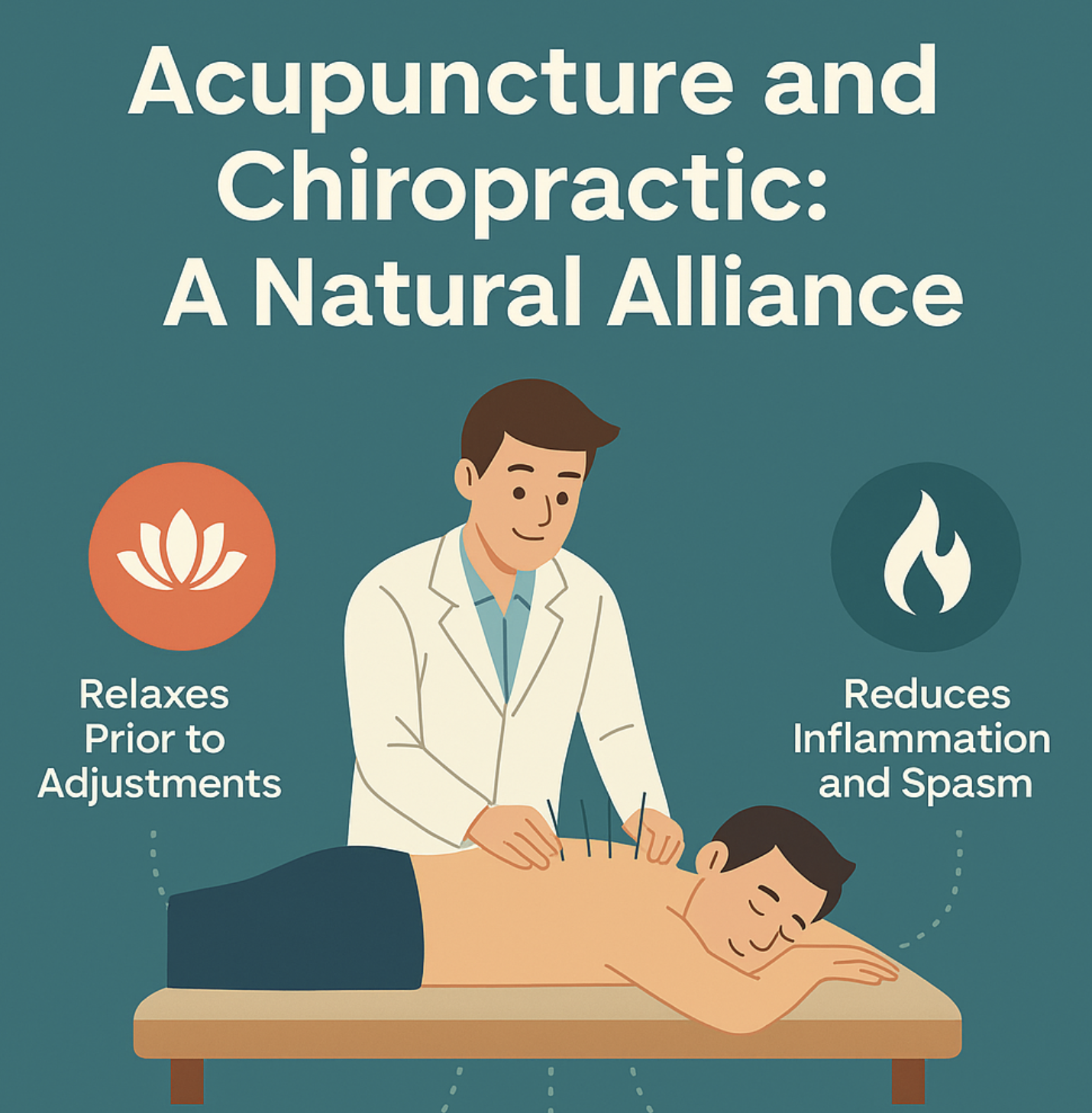 Introduction: Poking Fun at Pain (Literally)
If you’ve ever pulled a hamstring sprinting for the bus, twisted your back while gardening, or felt your neck seize up after one too many Zoom calls, you’ve probably asked yourself: “There’s got to be a better way to deal with this.”
Enter Acupuncture: the 3,000-year-old practice that still works better than your cousin’s “miracle” gadget he found on late-night TV. And when it’s paired with cutting-edge Chiropractic BioPhysics, you don’t just get treatment – you get a health strategy that could make your body feel like it came straight out of the factory showroom.
Now, before you imagine someone sticking knitting needles into your skin while you chant mantras, let’s clear a few things up. Acupuncture today is clean, scientific, safe, and — wait for it — surprisingly relaxing. In fact, many people snooze during treatment. (Yes, Acupuncture: the only medical procedure where snoring counts as a compliment.)
In this guide, we’ll explore what Acupuncture is, where it came from, what it treats, and why combining it with advanced Chiropractic Care gives you a health advantage that even professional athletes are tapping into.
What is Acupuncture?
At its core, Acupuncture is a drug-free, gentle method of stimulating the body’s own healing systems. It’s part of Traditional Chinese Medicine (TCM), a holistic framework that sees the body as an interconnected system rather than a collection of spare parts.
The basic idea? The body has channels (meridians) where life-energy (Qi, pronounced chee) flows. When this flow gets blocked or unbalanced, illness or pain develops. Acupuncture uses hair-thin needles to restore balance, unlock the flow, and kickstart natural repair mechanisms.
Now, if you’re more of a science person and words like “Qi” sound a bit too mystical, modern research has your back.
Acupuncture has been shown to:
- Stimulate the nervous system to release endorphins (your natural painkillers).
- Improve blood circulation and oxygen delivery to tissues.
- Reduce inflammation and relax muscle spasms.
- Influence brain activity, calming overactive pain signals.
Think of it this way: Acupuncture is like rebooting your body’s Wi-Fi router. Sometimes the signal (nerve communication) is weak, connections are slow (blood flow), or the system just glitches (chronic pain). Acupuncture switches it off and on again – and suddenly, everything runs smoother.
Is Acupuncture Painful?
This is probably the first question anyone asks — right after, “Wait, you’re going to put needles where?”
The honest answer: usually, no. The needles are so fine they’re closer to a strand of hair than the syringes used in medical procedures. In fact, most people are shocked by how painless the process is. The most common side effect? Blissful relaxation.
It’s not unusual for Dr. Hooper to step out of the room, come back 10 minutes later, and find patients snoring happily. (We don’t charge extra for the nap.)
That said, if your muscles are especially tight or inflamed, some points can feel tender. Occasionally you’ll experience sensations like tingling, heaviness, or warmth around the site. This is known as the “De Qi” response, which is basically your nervous system’s way of saying: “Hey, something good is happening here.”
Most patients describe it as oddly pleasant — the kind of strange-but-comfortable feeling you get when a fizzy drink tickles your nose. And unlike many medical treatments, Acupuncture comes without the “ugh” factor. No drugs. No lasting soreness. Just your body doing what it’s meant to: healing.
The Origins of Acupuncture and Traditional Chinese Medicine
A 3,000-Year-Old Health Hack
Long before fitness trackers, protein shakes, or “wellness influencers” on social media, people in ancient China were already figuring out how to keep the body healthy. They didn’t have MRI machines or ergonomic office chairs — but they did have an uncanny ability to observe how the body worked.
The earliest records of acupuncture date back to around 1000 BCE. (That’s about the time when people were still inventing the wheel in some parts of the world, while others were inventing ways to fix back pain.)
Over centuries, Chinese scholars mapped out hundreds of acupuncture points and meridians, refining them into a comprehensive medical system we now call Traditional Chinese Medicine (TCM).
The Philosophy: Qi, Yin, and Yang
At the heart of TCM is the idea of Qi — the vital energy that flows through pathways in the body. Imagine Qi as the body’s electricity grid. If the current flows smoothly, the lights stay on. If there’s a blockage or imbalance, things flicker, fail, or burn out.
TCM also relies on the concept of Yin and Yang: opposing forces that must remain in balance. Too much Yang (heat, activity, stress) and you’re a wired insomniac. Too much Yin (cold, stagnation, inactivity) and you’re lethargic, achy, and sluggish.
Acupuncture helps restore this balance, nudging the body back to harmony.
Yes, it sounds poetic — but here’s where it gets interesting: modern science increasingly validates these ideas. For Example:
- Blockages in Qi? Modern translation: nerve impingement or restricted blood flow.
- Yin-Yang imbalance? Think of it as hormonal imbalance or nervous system dysregulation.
- Restoring flow? Neurological stimulation and vascular improvement.
So while the ancient texts talk about rivers of energy, modern neuroscience talks about endorphins, neurotransmitters, and blood chemistry. Different language, same concept.
The Evolution: From Bronze Needles to Modern Clinics
In its earliest days, Acupuncture needles were made of stone, bone, or bronze. (Imagine explaining that to a patient: “Don’t worry, I’ll just tap this bronze spear into your elbow — it’ll help your headache.”) Thankfully, technology has improved.
Today’s Acupuncture needles are single-use, stainless steel, hair-thin, and sterile.They glide in so gently that many patients don’t even feel them.
Add modern techniques like electro-acupuncture (gentle electrical stimulation at the needle site), and you’ve got a system that’s part ancient wisdom, part high-tech biohacking.
East Meets West
In the 20th century, Acupuncture caught the attention of Western medicine. One famous turning point came in the 1970s when a New York Times journalist, recovering from surgery in China, wrote about his incredible pain relief through Acupuncture.
Suddenly, doctors in the West started saying, “Hmm… maybe there’s something to this.”
Since then, countless studies have explored how acupuncture works, particularly its effects on the nervous system, pain pathways, and inflammation.
While debates still rage in scientific circles, the consensus is clear: acupuncture isn’t placebo. It works — and often works where standard approaches fall short.
The Humour of History
Let’s be honest: the idea that a system invented thousands of years ago still works today is both humbling and hilarious. While medieval Europe was prescribing leeches for headaches, the Chinese were fine-tuning an elegant system of neural and vascular stimulation. (To be fair, leeches are making a comeback — but we promise we don’t keep any in the clinic fridge.)
The Spinal Centre – Neuro-Musculoskeletal SolutionsThe Spinal Centre provides the Best Natural Medicines, Health Products and Nutritional Solutions to Free You of Pain and Improve Your Spinal Health.The Spinal Centre is a leader in the management and treatment of spinal pain and disability including:
- Chronic Back and Neck Pain
- Cervical and Lumbar Disc Injuries with or without neruological changes
- All forms of arthritis including rheumatoid arthritis, psoriatic arthritis and osteoarthritis
- Neurodegenerative diseases such as Parkinson’s and Alzheimer’s disease
- Neuromuscular problems such as chronic back pain, headaches, migraines, neck or spinal pains
- Myofascial pain syndromes such as fibromyalgia, diffuse muscular or joint pains
- Austistic spectrum disorders including ADD, ADHD, learning difficulties and autism
- Fatigue, energy and mood disorders including chronic fatigue and depression
The Spinal Centre focuses on resolution with the development of individualised treatment programs using Conservative and Integrative Medicine; combining genetic, metabolic and nutritional testing with specific natural medicines to enhance your health and achieve your genetic potential.We have helped thousands – Why Not You?