Scientific References
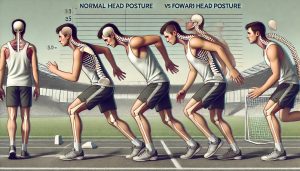
Forward Head Posture & Athletic Performance
Forward Head Posture: The Quiet Assassin of Athletic Prowess
In the race for athletic greatness, Forward Head Posture (FHP) is the uninvited guest you didn’t know was ruining your party. Dubbed the “text neck” of our times, FHP isn’t just about looking like you’re searching for lost change on the ground. It’s a biomechanical misstep that sneaks in to sabotage your speed, balance, and power.
Studies show athletes with FHP (CVA under 55°) jump lower, balance shakier, and run slower—because who needs agility, right? Plus, FHP slows nerve signals by up to 20%, turning your body’s internal Wi-Fi into dial-up. Fix your posture, and let your performance (and head) soar!
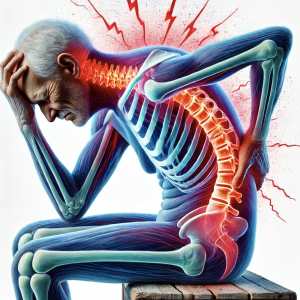
Adult Spinal Deformity
The Silent Menace
Adult Spinal Deformity Outweighs Other Chronic Conditions in Health Drama
When you think of health-related quality of life (HRQL) concerns, chronic conditions like arthritis, lung disease, diabetes, and congestive heart failure probably top your list.
But hold onto your lumbar support because Adult Spinal Deformity is here to steal the spotlight. We reveal how Adult Spinal Deformity is not just a Spinal issue – it is a Life issue.

Decreased Neck Muscle strength in patients with the loss of Cervical Lordosis
PUBLISHED: Clin Biomech (Bristol, Avon). 2016 Mar;33:98-102. doi: 10.1016/j.clinbiomech.2016.02.014. Epub 2016 Feb 27.
Referenced in Pub Med: https://www.ncbi.nlm.nih.gov/pubmed/26970701
AUTHORS: Alpayci M, Şenköy E, Delen V, Şah V, Yazmalar L, Erden M, Toprak M, Kaplan Ş.
CONCLUSIONS: According to our results, patients with the loss of cervical lordosis have reduced neck muscle strength, especially in the extensors.
Correlation between Cervical Lordosis and Cervical Disc Herniation in young patients with Neck Pain
PUBLISHED: Medicine (Baltimore). 2019 Aug;98(31):e16545. doi: 10.1097/MD.0000000000016545. PubMed: https://www.ncbi.nlm.nih.gov/pubmed/31374017
AUTHORS: Gao K, Zhang J, Lai J, Liu W, Lyu H, Wu Y, Lin Z, Cao Y.
RESULTS: The degree of disc herniation was higher in the straight and kyphosis groups compared to the lordosis group.
With the improvement of cervical lordotic curvature, the degree of disc herniation decreased and height of disc space increased.
CONCLUSIONS: The degree of disc herniation and cervical spinal cord compression are inversely correlated to cervical lordosis in young neck pain patients, and the degree of disc herniation and height of disc space can recover with the recovery of cervical lordotic curvature.
Addition of a Sagittal Cervical Posture Corrective Orthotic Device to a Multimodal Rehabilitation Program Improves Short- and Long-Term Outcomes in Patients with Discogenic Cervical Radiculopathy
PUBLISHED: Arch Phys Med Rehabil. 2016 Dec;97(12):2034-2044. doi: 10.1016/j.apmr.2016.07.022. Epub 2016 Aug 27. Pub Med: https://www.ncbi.nlm.nih.gov/pubmed/27576192
AUTHORS: Moustafa IM, Diab AA, Taha S, Harrison DE.
CONCLUSIONS: The addition of the Denneroll cervical orthotic device to a multimodal program positively affected discogenic CR outcomes at long-term follow-up.
We speculate that improved cervical lordosis and reduced AHT contributed to our findings.
Demonstration of Central Conduction Time and Neuroplastic changes after Cervical Lordosis Rehabilitation in Asymptomatic Subjects
PRESENTED: Proceedings of the 14th biennial congress of the World Federation of Chiropractic, March 15-18, 2017. Pub Med: https://www.ncbi.nlm.nih.gov/pmc/articles/PMC5345783/
AUTHORS: Moustafa IM, Diab AAM, Taha S, Harrison DE.
CONCLUSION: Improvement of cervical spine alignment has an effect on central conduction time.
Prospective, Randomised, Double-Blind Clinical Study evaluating the correlation of Clinical Outcomes and Cervical Sagittal Alignment
PUBLISHED: Neurosurgery. 2011 May;68(5):1309-16; discussion 1316. doi: 10.1227/NEU.0b013e31820b51f3. PUB MED: https://www.ncbi.nlm.nih.gov/pubmed/21792113
AUTHORS: Villavicencio AT, Babuska JM, Ashton A, Busch E, Roeca C, Nelson EL, Mason A, Burneikiene S.
RESULTS: Patients who had maintained or improved segmental sagittal alignment, regardless of graft type, achieved a higher degree of improvement in Short Form-36 Physical Component Summary and Neck Disability Index scores. This was statistically significant (P < .038).
CONCLUSION: Maintaining a consistent segmental sagittal alignment or increasing segmental lordosis was related to a higher degree of improvement in clinical outcomes.
Spinal Centre Note: Appears surgeons are picking up what Chiropractic BioPhysics practitioners have been talking about. Well done.