Chiropractic

Chiropractic Facilitating Stroke Recovery
Early evidence suggests a single chiropractic session can measurably boost leg strength and brain-to-muscle drive in people living with chronic stroke. Building on Holt et al. (2019), we explain how precise spinal adjustments may sharpen cortical output and open a short ‘plasticity window’ for practice.
At The Spinal Centre, advanced assessment and targeted, gentle care are paired with structured progress checks to turn small gains into lasting function. No miracles promised—just careful screening, individualised plans, and measurable outcomes that support safer stance, steadier steps, and more confident daily movement. Read the full explainer and see the key results.

Training and Rehabilitation
You need to be a patient of the practice and logged in to your account, to see this resource.

The Result of Poor Alignment
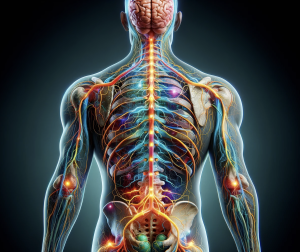
If phrases like “My back is out” or “I’ve got a crick in my neck” hit close to home, your spine might be sending you an SOS. Welcome to the world of spinal kinesiopathology – a fancy term for when your spine isn’t moving or aligning as it should.
Think of your spine as the freeway of your nervous system; when it’s out of alignment, your body can’t run smoothly. Whether it’s “text neck” from too much phone time or the aftermath of an awkward lift, poor alignment can ripple through your body, causing everything from headaches to fatigue.
Give your spine some TLC – it’s been holding you up for years!
What is Chiropractic?
Chiropractic: An Art, Science and Philosophy.
In the late 1800s, a self-educated teacher and healer named Daniel David Palmer performed what is now recognised as the first spinal adjustment, giving birth to modern Chiropractic.
The term “Chiropractic” is derived from Greek words meaning “treatment by hand,” which is precisely what chiropractors do. Chiropractors primarily use their hands to fine tune the body to promote healing and wellbeing.
Healing the Whole Body
The core philosophy of Chiropractic care is rooted in the belief that all bodily functions are interconnected, and the healing process encompasses the entire body. Here are some of key tenets:
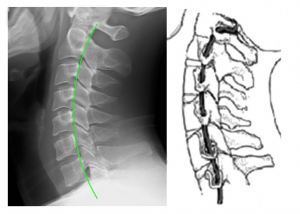
Loss of Neck Curve Reduces Blood Flow to the Brain
Blood flow to the Brain is affected by the curve in your Neck
Decreased Vertebral Artery Haemodynamics in Patients with Loss of Cervical Lordosis.
An interesting study by Bulut MD et. al. 2016 of relevance to virtually all patients who visit a chiropractor shows a correlation between the curve in your neck and blood flow to the brain.
That is right – the correct curve in your neck allows the blood to flow to your brain in an optimal fashion.

Spinal Reconstructive Care – Strengthen and Stabilise Your Spine
Continue to Strengthen and Stabilise Your Spine
Spinal Reconstructive Care is designed to further strengthen and stabilise your spine. With decreased pains and better mobility, true healing, spinal correction and restoration of health can occur.
Spinal Reconstructive Care usually involves one session per week to one session per fortnight for most adult patients. Reviews are usually conducted depending on the health goals of the patient and complexity of spinal injuries.
The Key Benefits of Spinal Reconstructive Care:
- To Build on the work of the Initial Intensive Care and Corrective Care Programs.
- Continue your Postural and Structural Correction.
- Continue Strengthen and Stabilise Your Spine.
- Improve Core Strength and Stability.
- Continue to retrain muscle, ligaments and joint structures to achieve a more permanent Correction.
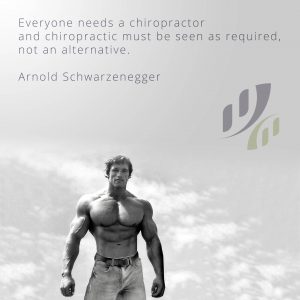
Arnold Schwarzenegger
“Everyone needs a chiropractor and chiropractic must be seen as required, not an alternative.” – Arnold Schwarzenegger.