Chronic Pain

Comparison of Axial and Flexural Stresses in Lordosis and three Buckled Configurations of the Cervical Spine
PUBLISHED: Clin Biomech (Bristol, Avon). 2001 May;16(4):276-84. PubMed: https://www.ncbi.nlm.nih.gov/pubmed/11358614
AUTHORS: Harrison DE, Harrison DD, Janik TJ, William Jones E, Cailliet R, Normand M.
CONCLUSIONS: The stresses in kyphotic areas are very large and opposite in direction compared to a normal lordosis.
This analysis provides the basis for the formation of osteophytes (Wolff’s Law) on the anterior margins of vertebrae in kyphotic regions of the sagittal cervical curve.
This indicates that any kyphosis is an undesirable configuration in the cervical spine.
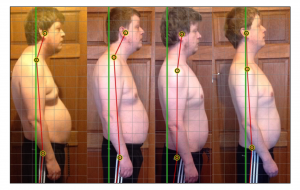
Correcting American Posture
Mr. F. is a 28 year old male garden worker who attended the Practice with what we call ‘American Posture’.
This is a real patient within the Clinic, with untouched photographs.
And yes, he was only 26 when he started care. He was suffering with chronic low back pain (CLBP). He had been enduring spinal pain for 10 years and things were getting progressively worse.
In terms of postural distortion; Mr. F. had what we affectionally call an ‘American Posture’. American Posture is a very common structural disturbance we see in a clinic. And as the name suggests it is very common postural problem within America.
American posture can come in different shapes and sizes. It is a driver of many lower back and neck conditions. As well chronic pain and disability.

New Guidelines for GP’s Treating Chronic Pain
New ANZCA Recommendations – Don’t Use Drugs, See a Chiropractor!
Brand New Guidelines have been issued by the Faculty of Pain and Medicine in the Australian and New Zealand College of Anaesthetists (ANZCA) for the treatment of chronic pain and disability.
The new recommendations will have wide reaching effects and impact all medical practitioners (GP’s) and allied health professionals in Australia and New Zealand.
The guidelines relate to the management of all forms of pain. From back, neck and spinal pain, non-cancer pain, to those with neuropathic pains.
What is interesting is that Chiropractors have been championing most of these recommendations for decades.
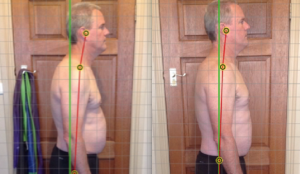
Correcting ‘Australian Posture’ – Chronic Back Pain
Case History: Chronic Lower Back Pain, Forward Head Carriage and ‘Australian Posture’
Mr. M. is a 44 year old male sales and office worker who attended the Practice. Yes a real patient, real person.
He was suffering with chronic lower back pain (CLBP). He had been enduring spinal pain for 25 years and things were getting progressively worse.
In terms of postural distortion; Mr. M. had what we affectionally call an ‘Australian Posture’. Australian Posture is something we commonly see in Practice and is a driver of many lower back and neck conditions.
Australian Posture is the forward translation of the torso and head forward of the vertical green axis line, in the manner you see below. Not only does this create tremendous pressure on the lower back, but also the neck and shoulders.
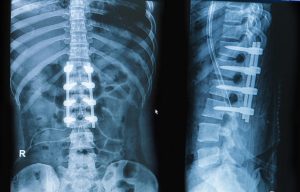
Spinal Fusion is a Trap
Surgeons are being warned to stop routinely undertaking spine-fusing operations over fears too many patients are being left needlessly crippled.
A gathering of Australian pain specialists have been told to scale back their reliance on common lumbar fusion operations by visiting US expert Dr Gary Franklin.
Dr Franklin – a neurologist and medical director of the Washington State Department of Labour and Industries – said his US study also found 44 per cent of workers were left permanently disabled a decade after fusion surgery.

Acupuncture Reduces Chronic Pain
As a clinician very rarely would I have a patient with a musculoskeletal condition that does not respond well to Acupuncture.
In reality has little to do with the nature of their complaint and more to do with the concept of giving themselves ‘permission to be there’ for care.
Luckily acupuncture works – whether you believe in it or not.
In a recent analysis published in the Archives of Internal Medicine, researchers concluded that acupuncture has a definite effect in reducing chronic pain, such as back pain and headaches – more so than standard pain management.

Chin Tucks: Why They’re Important
The day to day use of technology, often spending hours hunching over, slouching down and excessively flexing your neck can cause both damage and deterioration of the spine. Chin Tucks are perfect for specifically targeting the muscles in your neck which assists in reversing the damage while improving both stability and functional strength.